

New Zealand’s most dangerous skin cancer — and why early detection at SkinCentre matters.
New Zealand has the highest rate of melanoma in the world, and here in the sunny Bay of Plenty, we see the effects of sun exposure daily.
While basal cell carcinoma (BCC) and squamous cell carcinoma (SCC) are more common, melanoma causes the most deaths from skin cancer — often because it’s detected too late.
At SkinCentre Tauranga, our specialist dermatologists are trained in the early diagnosis and surgical management of melanoma, and we are often the first point of specialist contact for people with concerning skin lesions.
What Is Melanoma?
Melanoma is a form of skin cancer that arises from melanocytes, the pigment-producing cells of the skin. Unlike BCC and SCC, melanoma can spread (metastasise) to other parts of the body if not caught early.
The good news? When melanoma is identified and removed in its early stages, it is highly curable with surgery alone.
That’s why expert skin checks and prompt treatment are so important.
—
What Does Melanoma Look Like?
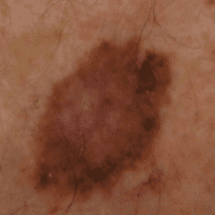
Melanoma doesn’t always follow the rules, but the ABCDE checklist is a helpful way to remember what to look for in moles or new spots:
A – Asymmetry: One half looks different to the other
B – Border: Uneven, blurred, or notched edges
C – Colour: More than one colour or uneven pigmentation
D – Diameter: Larger than 6mm — though some melanomas are smaller
E – Evolving: Any change in size, shape, colour, or behaviour (itching, bleeding)
Other signs to be aware of:
A spot that grows quickly
A firm lump or pigmented bump
A lesion that looks different from the others (the “ugly duckling” sign)
A sore that doesn’t heal
Who’s at Risk?
Anyone can get melanoma, but your risk is higher if you:
Have fair skin, red or blonde hair, or blue/green eyes
Have a personal or family history of melanoma
Have a large number of moles or atypical moles
Work or play outdoors regularly
Experienced intense sunburns, particularly in childhood
Have used sunbeds
—
Why Early Detection at SkinCentre Matters
At SkinCentre, your skin check is performed by a Dermatologist. We use advanced dermoscopy to assess all moles and lesions thoroughly.
If a lesion is concerning, we can organise:
Immediate biopsy on-site
Surgical excision of early melanomas
Direct referral to melanoma multidisciplinary teams for advanced or complex cases
We understand how important early action is — and we move quickly when melanoma is suspected.
—
Yes — We Perform Melanoma Surgery
If your melanoma is caught early, it can often be completely treated with surgical excision at SkinCentre. Our dermatologic surgeons are experienced in managing early-stage melanoma and reconstructing cosmetically sensitive areas such as the face, scalp, ears, or limbs.
More advanced or deep melanomas may be referred to a public or private multidisciplinary team for additional investigations and oncology input — but your first step should be with us.
—
How Often Should You Have a Skin Check?
We recommend:
Annual full-body skin checks for adults
6-monthly checks if you’re at higher risk
Immediate assessment if you notice any new, changing, or unusual lesions
We also offer regular surveillance for patients with a history of melanoma or dysplastic naevi (atypical moles).
—
Protect Your Skin — Year Round
Melanoma prevention starts with sun protection. Be sun smart every day by:
Wearing broad-spectrum SPF 50+ sunscreen, even on cloudy days
Avoiding sunburn — especially during childhood
Wearing hats, long sleeves, and sunglasses
Avoiding sunbeds and tanning booths
Performing monthly self-checks for new or changing lesions
—
Book a Skin Check With a Dermatologist
If you’re concerned about a mole or spot, or it’s time for your routine skin check, don’t wait. Early detection is everything.
Want to know more?